A few years ago you could barely find a course for leading sauna and cold plunge. Now there are certificates for everything — and it can be hard to tell a weekend badge from real training. The market makes the stakes clear: the cold plunge tub market alone was valued at roughly $355 million in 2025 and is projected to reach about $660 million by 2033, with the commercial segment — studios, gyms, spas — making up the large majority of it. More rooms means more people stepping in to lead them, and the question of who is actually qualified to do that matters more every month.
If you’re weighing a contrast therapy certification, this guide is a way to compare programs honestly — what a good cold water therapy course should teach, what the word “cryotherapy certification” really means, and the handful of questions that separate a credential you can build a career on from a printable certificate.
What does a contrast therapy certification actually certify?
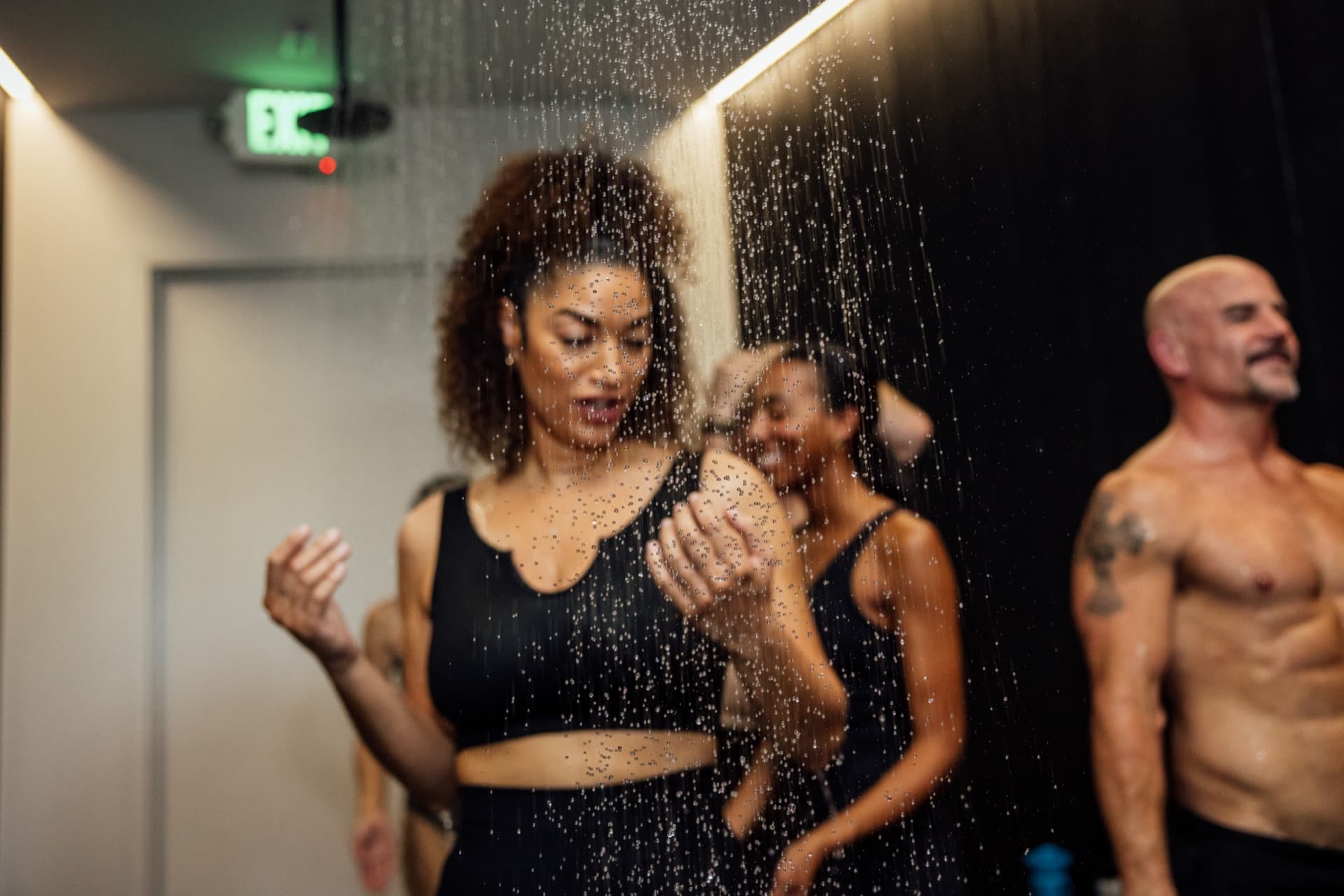
Sauna and cold plunge are strong medicine, and the science is real. Regular sauna use is associated with lower all-cause mortality and better cardiovascular health; deliberate cold exposure has its own growing literature. But a certificate that only proves you sat through the science is missing the harder half of the job. The most consequential seconds in any session are the first seconds of a cold plunge or ice bath, when sudden skin cooling triggers the cold shock response — an involuntary gasp, a spike in heart rate, and rapid uncontrolled breathing. A real certification proves you can recognize that, coach a person through it, and keep a room of strangers safe while you do.
So the first filter is simple: does the program certify knowledge, or does it certify that you can lead? Those are different things, and only one of them is worth paying for.
Cold plunge certificate, sauna certification, or both?
Search results split the field into narrow slices — a cold plunge certificate here, a certified sauna course there, an ice bath workshop somewhere else. In practice, the best modern studios run heat and cold together as contrast therapy, because the adaptation lives in the swing between them. A program that only teaches one half leaves you half-trained for the room you’ll actually be standing in. When you compare options, favor training that treats sauna and cold plunge as one integrated practice rather than two separate badges.
What about “cryotherapy certification”?
A lot of people searching for cold training type “cryotherapy certification,” so it’s worth being precise. Cryotherapy usually refers to machine-based, whole-body cold chambers that blast the skin with cold air or nitrogen vapor for a few minutes. Cold water immersion — the plunge or ice bath — is a different modality with a different physiological profile and a different skill set to lead. They’re often lumped together online, but a course in operating a cryo chamber will not prepare you to guide a group through the water, and vice versa. If your goal is to lead people through real sauna and cold plunge sessions, look for a contrast therapy or cold water immersion course, not a cryo-machine credential.
What should a good sauna and cold plunge course teach?
A serious curriculum covers three layers, not one. The biological layer is the thermal science and the dosing — real heat and real cold, well-dosed, with the guardrails to match. The psychological layer is how you communicate under stress, screen for who needs a doctor first, and hold a person steady when their nervous system is loud. And the social layer is the part most programs skip entirely: how to turn a room of strangers into a group that actually takes care of each other.
That third layer is not a nicety. The U.S. Surgeon General has described loneliness as a public health epidemic, and a growing number of people are coming to contrast therapy as much for connection as for recovery. An instructor who can only run a timer is leaving the most valuable part of the work on the table.
“We are showing people how to use these tools—sauna and cold plunge—to come into community.”
How do you know a program will make you safe to lead a room?
Safety is non-negotiable, and the way a program handles it tells you almost everything. Ask whether the training covers medical screening — Harvard Health advises that people with uncontrolled high blood pressure or heart disease check with a doctor before sauna use, and a good instructor asks before the first round, not after. Ask whether you’ll be taught to read the cold shock response and coach the breath at entry. And ask whether you actually practice leading in front of an evaluator, or just watch and pass a quiz. At Revivery we frame the role as the competent protector — someone with the steadiness of a great parent, who keeps everyone safe but knows when to push, encourage, and guide. You can’t certify that with a multiple-choice test.
Does it include continuing education credits?
If you already work in fitness, coaching, or recovery, ask whether the certification carries continuing education credits you can use. Revivery Instructor Training’s REV-1, for example, awards 30 CrossFit CEUs — a sign that an outside body has reviewed the material and a practical way to fold the credential into the career you already have. CEUs aren’t the whole picture, but they’re a useful signal that a program is more than a logo on a PDF.
A short checklist for choosing
Before you enroll anywhere, run the program past five questions. Does it teach sauna and cold plunge as one integrated practice, not a single badge? Does it cover the science, the safety screening, and the facilitation craft? Will you practice leading and be evaluated on it, not just tested on facts? Does it take community and connection seriously as part of the work? And does the credential carry weight outside the program — through CEUs, a real cohort, and instructors who stand behind it? A program that answers yes to all five is teaching you to lead. The rest are selling you a certificate.
“Everything that you learn within this training is so impactful in everything you do in your life. It changes the lens you’re viewing the world through.”
The tools are simple — heat, cold, a room, and a group of people who decided to do a hard thing together. What makes it work is the person leading. Choose the training that takes that seriously, because the sauna and the cold are the capsule, and connection is the medicine.
Train to lead, not just to pass
REV-1 teaches the science, the safety protocols, and the facilitation craft of guided contrast therapy. REV-1 Foundations online + 3 days in Tampa. 30 CrossFit CEUs.
Compare REV-1 Cohort DatesThis article is educational and isn’t medical advice. If you have a health condition, talk with your doctor before starting sauna or cold plunge practice. Instructor quotes are from RIT graduate interviews and surveys, lightly edited for clarity.