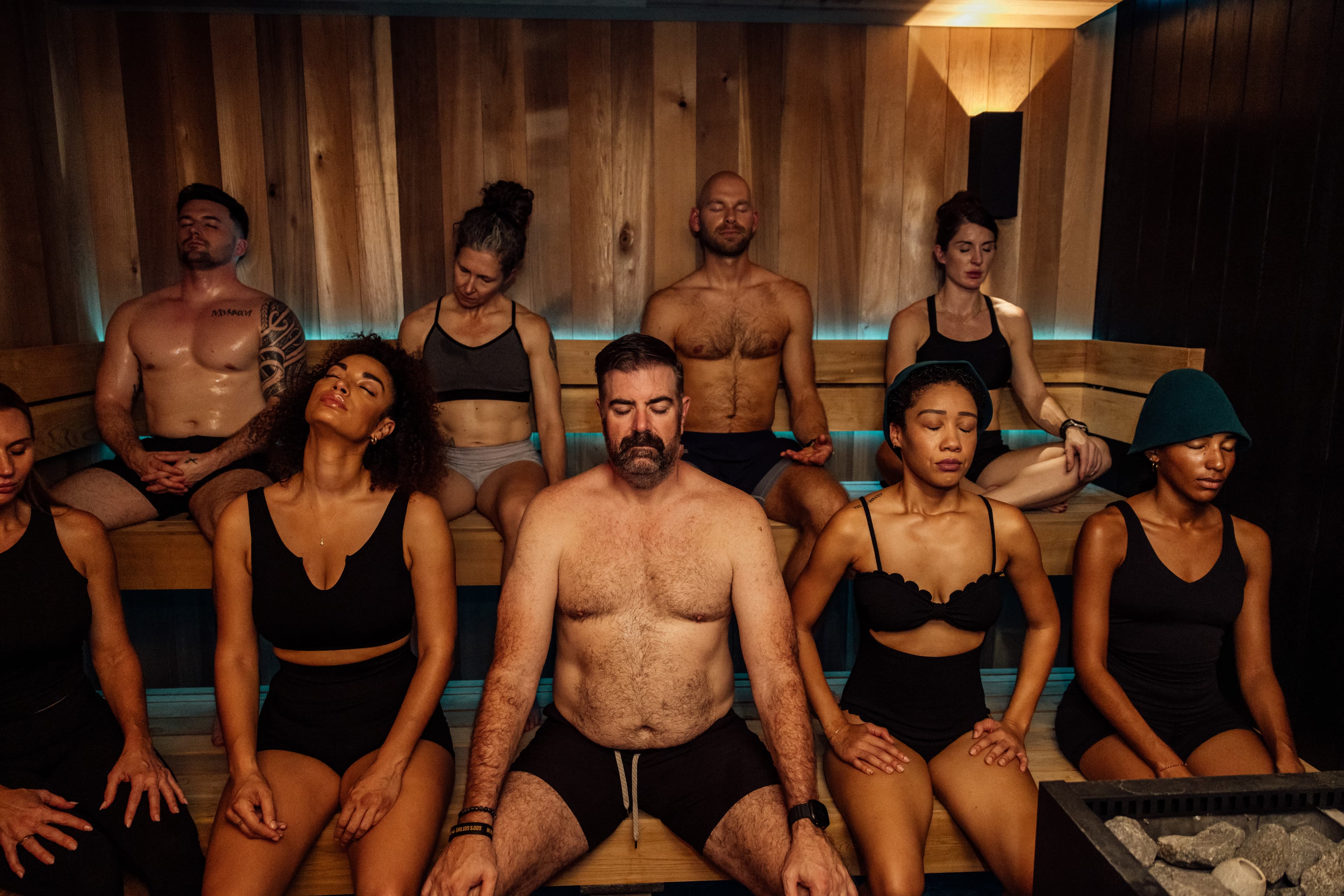
What actually happens after certification? We surveyed graduates of Revivery Instructor Training — people anywhere from six months to more than two years past their REV-1 credential — about life in the room: where they’re leading, what surprises them, what’s hard, and what keeps them coming back. Their answers, lightly edited for clarity, are below.
100%
of surveyed graduates are actively leading sessions or applying the method
450+
guided sessions led collectively since certification
100%
practice contrast therapy weekly as part of their own self-care
The work shows up everywhere
The stereotype is that a sauna and cold plunge instructor works at a bathhouse. The reality is broader. Our graduates are leading in wellness studios, community centers, chiropractic and coaching practices, women’s groups, and corporate wellbeing programs. One partnered with a mobile sauna and cold plunge company. Several run sessions inside businesses they already owned — the method became a new room in the house they’d already built.
“People ask me, where did I learn this practice? How is it I know this information?”
The moments that stay with you
We asked for the most powerful moment each instructor had witnessed as a session leader. Nobody talked about protocols or temperatures. Every answer was about a person.
One instructor described a father who brought his teenage son to a session. The prompt was “what is something you’re proud of?” The father shared first. Then the son said how proud he was of his mom, his brother, his sister — and his dad, for his hard work. “I asked the father how he felt about that,” the instructor wrote, “and he broke down in happy tears.”
Another wrote about a member who carried a profound loss, who found that the cold was the only place she could truly feel it — and who now returns, week after week, for the community she found in those sessions.
“People cry over how profound and intense the experience is — especially when they didn’t expect it. The heat puts their barriers down.”
“He listened to my cues and was fully present. He was so proud of himself, smiling like a little kid even thirty minutes later. I love leading brand-new people through the heat and the cold and witnessing their astonishment that they can do hard things.”
The hard parts are human, not technical
When we asked about the biggest challenges, almost nothing was about thermal protocols. The honest answers: leading a session when only one person shows up. Finding fresh prompts for regulars who come every week. Retaining the science well enough to teach it on the spot. And the deepest one — unlearning the instinct to fix.
“The biggest challenge is stepping away from the ‘I have something to fix your problems’ approach.”
That last one is the heart of the method. A guided session isn’t therapy and the instructor isn’t there to repair anyone — they’re there to hold the container, what we call the competent protector role: keeping everyone safe while knowing when to push, encourage, and guide. Knowing the difference is a skill, and our graduates told us it’s one they keep practicing long after certification.
The practice changes the practitioner
Every single graduate surveyed still practices contrast therapy weekly for their own self-care. And when we asked how their personal practice had evolved, the answers went well beyond the sauna.
“I feel like I see things differently. I’m much more patient. I am much more present, more understanding, and I assume positive intention from people first.”
“I have a better understanding of what’s happening in my body, mind, and breath. I started choosing my reaction with curiosity and openness.”
Members feel it too. Asked how their members typically describe sessions, instructors most often chose “physically relaxed or energized,” “mentally clear or focused,” and “connected to the group or community” — with “empowered: I did something hard” close behind. The Bio/Psych/Social Method predicts exactly that pattern: the biology gets people in the door, and the connection keeps them coming back.
Where they’re headed next
The graduates we surveyed asked for more: advanced breathwork and meditation, nervous system regulation tools they can use in the minutes before a session begins, deeper facilitation craft, and ways to keep learning from each other instead of self-assessing alone. That’s precisely what REV-2, The Deepening was built for — six weeks of relational intelligence, somatic science, and advanced facilitation for certified instructors.
And if you’re reading this on the other side of the door — not yet certified, but recognizing yourself in these stories — the place to start is REV-1.
Join them in the room
REV-1: Foundations online + 3-day Tampa immersive. The credential and the toolkit to lead guided contrast therapy.
Choose Your REV-1 DatesQuotes are from a 2026 survey of RIT-certified instructors, shared anonymously and lightly edited for clarity and length.