Five years ago, “sauna and cold plunge instructor” wasn’t a job title anyone put on a business card. Now it’s a line on a schedule at studios, gyms, spas, resorts, and recovery centers across the country — and the rooms need someone qualified standing in them. The Global Wellness Institute’s 2025 Wellness Economy Monitor puts the thermal and mineral springs sector — hot springs, bathhouses, social bathing — among the fastest-growing wellness categories in the world, forecast to expand about 10 percent a year through 2029, with hundreds of water-based destinations in the investment pipeline.
So if you finish a contrast therapy certificate, where do you actually go to work? Here’s an honest look at the settings, what the labor data does and doesn’t say, and what employers are really hiring for.
Are sauna and cold plunge instructor jobs actually growing?
Start with the caveat: the U.S. Bureau of Labor Statistics does not track “contrast therapy instructor” as its own occupation. The closest official category is fitness trainers and group fitness instructors — and that category is growing quickly. BLS projects 12 percent employment growth from 2024 to 2034, four times the average across all occupations, with roughly 74,200 openings a year. The occupation held about 370,100 jobs in 2024, and 14 percent of those workers were self-employed.
The adjacent number worth watching is the spa industry. ISPA’s 2026 “Big Five” statistics, researched by PwC, report $23.5 billion in U.S. spa revenue in 2025 across 22,060 locations, employing 376,900 people as of January 2026. Those are the buildings adding sauna and cold plunge amenities fastest — and amenities without trained people are just expensive equipment.
Where do certified contrast therapy instructors work?
Six settings come up again and again. Most instructors end up working in two or three of them at once.
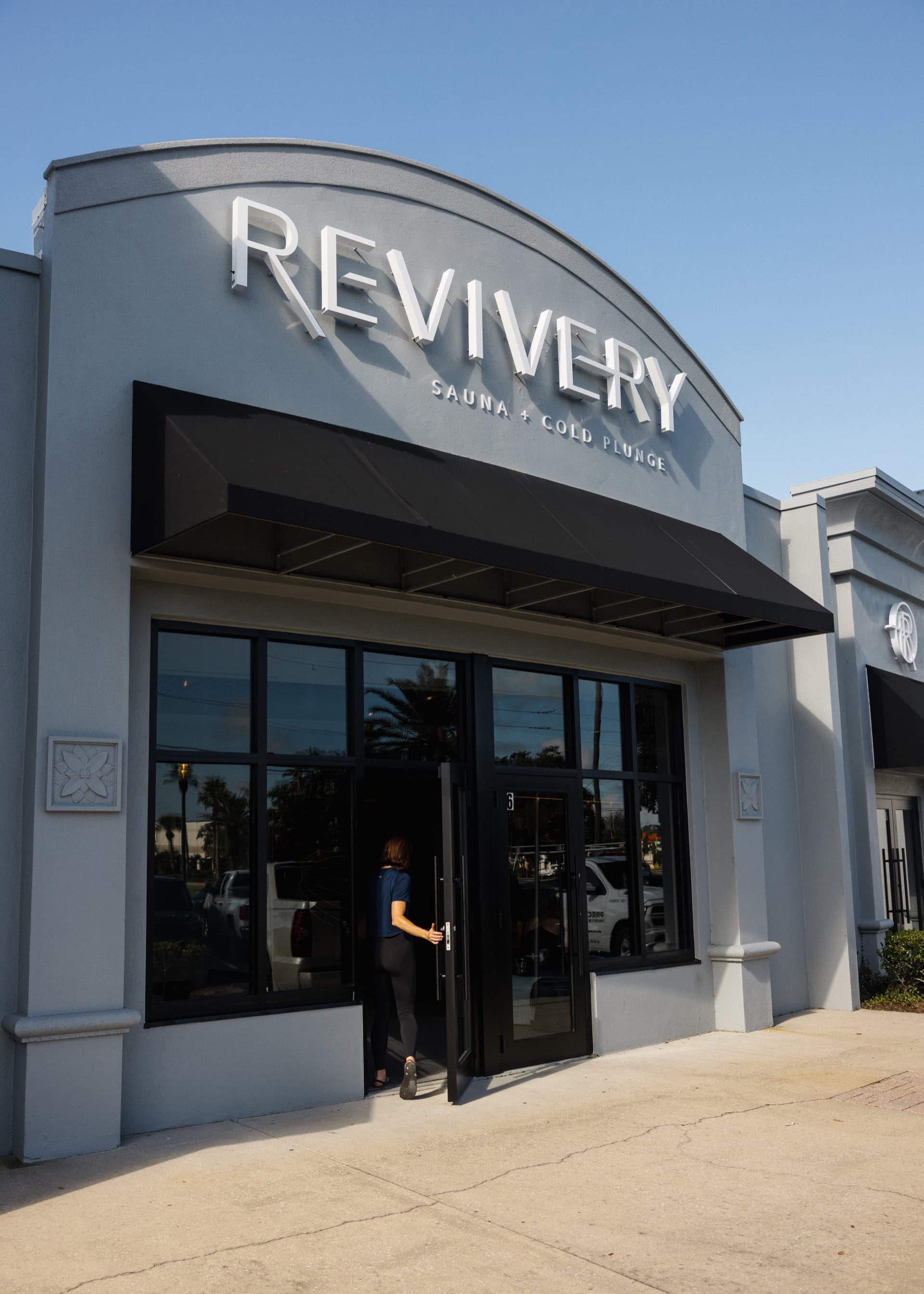
1. Contrast therapy studios and social bathhouses.The purpose-built version — a sauna, a cold plunge, a schedule of guided classes. This is the closest thing to a home base for the work, and it’s the category GWI flags as a “huge global trend.” Sessions are booked like fitness classes, and the instructor is the product.
2. Gyms, boxes, and fitness clubs. Recovery has become a membership differentiator, and clubs that installed a sauna and an ice bath quickly discovered members want to be led through them rather than left to guess. This is also why REV-1 carries 30 CrossFit CEUs — many of the people leading these rooms are already coaching in them.
3. Spas, hotels, and resorts.Hydrothermal circuits have been standard in destination spas for decades; what’s new is programming them as guided group experiences instead of self-serve amenities. A guided session is a bookable, higher-value offering, and the property needs someone credentialed to run it.
4. Recovery and performance centers, and clinical adjacent settings. Sports recovery lounges, longevity clinics, and some physical therapy and chiropractic practices now offer contrast therapy alongside their core services. Instructors here work adjacent to licensed clinicians, not as them — a distinction good programs teach explicitly, including where your scope ends and a referral begins.
5. Events, retreats, and corporate work.Mobile sauna trailers and portable plunge tubs make the practice location-independent. Instructors lead at retreats, festivals, team offsites, and private groups. It’s the most entrepreneurial path and often the best-paid per session, though the least predictable week to week.
6. Their own studio or practice.Some graduates build the thing themselves. That’s a business question as much as a teaching one — buildout, insurance, staffing, water treatment, scheduling — which is why the Institute treats the studio owner track as a separate body of work from instructor training.
“People ask me, where did I learn this practice? How is it I know this information?”
What does a sauna or cold plunge instructor get paid?
There’s no clean national figure, and anyone quoting one is guessing. The most defensible reference point is the BLS median wage for fitness trainers and instructors: $46,180 a year as of May 2024, with the bottom 10 percent under $27,580 and the top 10 percent above $82,050. In practice, guided contrast therapy work is usually paid per session rather than salaried, which means income tracks how many rooms you can lead, how well you retain a following, and whether you stack studio shifts with private groups, retreats, and corporate bookings.
Two honest notes. Most people don’t start full-time; they add sessions to existing coaching, therapy, or studio work and build from there. And the differentiator in this field isn’t how many certificates you hold — it’s whether a room trusts you. That reputation is what turns a class into a following.
Do you need a certification to lead sauna and ice bath sessions?
There’s no state license for contrast therapy the way there is for massage or physical therapy. What certification does is make you employable and insurable: facilities want documentation that the person running heat and cold understands the physiology, the contraindications, and the emergency protocol. Harvard Health’s review of sauna research finds regular sauna use safe for most healthy people — with the real risk concentrated in the exceptions: cardiovascular conditions, certain medications, alcohol, and overexposure. Knowing who shouldn’t be in the room today is a hiring requirement, not a nice-to-have.
If you’re still comparing options, we wrote a full guide on how to choose a contrast therapy certification program and a practical walkthrough of how to become a sauna and cold plunge instructor.
What are employers actually hiring for?
Facilities can teach someone their thermostat settings in an afternoon. What they can’t manufacture is a person who can hold a room of strangers through something genuinely hard — and send them out wanting to come back. That’s a facilitation skill, and it’s the part most weekend courses skip entirely.
It also happens to be the part with the clearest market logic behind it. The U.S. Surgeon General’s 2023 advisory on social connection frames loneliness as a public health crisis with mortality effects on the scale of smoking. People aren’t booking guided sessions purely for the heat — they’re booking a reason to be in a room with other people. The sauna and cold are the capsule; connection is the medicine. Instructors who understand that are the ones studios keep on the schedule.
“To guide people, to be their competent protector, to hold space for somebody is a very powerful thing.”
How does the training prepare you for the job, not just the test?
The Bio/Psych/Social Method is built around the three things every one of those settings asks of you. The biological thread covers thermal science, safe protocol ranges, contraindications, and what to do when something goes sideways. The psychological thread teaches nonviolent communication, attunement, and trauma-informed facilitation. The social thread trains the craft of building a group that holds each other. Graduates of the sauna and cold plunge instructor certification rehearse leading real rooms with real feedback before they ever lead a paying one.
“The Revivery Instructor Training will show you how to put these things together to make a difference.”
The short version
Certified contrast therapy instructors work in studios and bathhouses, gyms and boxes, spas and resorts, recovery and clinic-adjacent centers, mobile and event settings, and their own businesses — usually more than one at a time. The labor data for the closest tracked occupation points up, and the fastest-growing wellness sector in the world is the one built around hot water, cold water, and gathering. What decides whether you get the schedule isn’t the certificate on the wall. It’s whether you’re the person a room trusts.
Start with REV-1
The thermal science, the safety protocol, and the trauma-informed facilitation craft behind guided contrast therapy. REV-1 Foundations online + 3 days in Tampa. 30 CrossFit CEUs.
Choose Your REV-1 DatesThis article is educational and isn’t career, financial, or medical advice. Wage and employment figures come from the U.S. Bureau of Labor Statistics category for fitness trainers and instructors, which is the nearest tracked occupation — there is no BLS category for contrast therapy instructors, and earnings vary widely by market, setting, and hours. Certification requirements and insurance expectations differ by employer and by state. Sauna and cold plunge carry real risks for people with cardiovascular conditions or on certain medications — talk with a doctor before starting a practice. Instructor quotes are from RIT graduate surveys and interviews, lightly edited for clarity.